Ring Size Converter
Ring Size Converter
Convert ring sizes between US, UK, EU, JP, diameter and circumference measurements
Size Converter
Measurements are rounded to 0.1mm
Converted Sizes
Reference Table
| US | UK | EU | JP | AU | CH | DE | mm | mm (Circ) |
|---|---|---|---|---|---|---|---|---|
| 3 | F | 44 | 4 | F | 4 | 14 | 14.1 | 44.2 |
| 3.5 | G | 45 | 5 | G | 5.25 | 14.5 | 14.5 | 45.5 |
| 4 | H | 46.5 | 7 | H | 6.5 | 15 | 14.9 | 46.8 |
| 4.5 | I | 48 | 8 | I | 7.75 | 15.25 | 15.3 | 48 |
| 5 | J 1/2 | 49 | 9 | J 1/2 | 9 | 15.75 | 15.7 | 49.3 |
| 5.5 | L | 50.5 | 10 | L | 10.25 | 16 | 16.1 | 50.6 |
| 6 | M | 52 | 12 | M | 11.5 | 16.5 | 16.5 | 51.9 |
| 6.5 | N | 53 | 13 | N | 12.75 | 17 | 16.9 | 53.1 |
| 7 | O | 54.5 | 14 | O | 14 | 17.25 | 17.3 | 54.4 |
| 7.5 | P | 56 | 15 | P | 15.25 | 17.75 | 17.7 | 55.7 |
| 8 | Q | 57 | 16 | Q | 16.5 | 18 | 18.1 | 57 |
| 8.5 | R | 58.5 | 17 | R | 17.75 | 18.5 | 18.5 | 58.3 |
| 9 | S | 59.5 | 18 | S | 19 | 19 | 19 | 59.5 |
| 9.5 | T | 61 | 19 | T | 20.25 | 19.5 | 19.4 | 60.8 |
| 10 | U | 62 | 20 | U | 21.5 | 20 | 19.8 | 62.1 |
| 10.5 | V | 63.5 | 22 | V | 22.75 | 20.25 | 20.2 | 63.4 |
| 11 | W | 65 | 23 | W | 24 | 20.75 | 20.6 | 64.6 |
| 11.5 | X | 66 | 24 | X | 25.25 | 21 | 21 | 65.9 |
| 12 | Y | 67.5 | 25 | Y | 26.5 | 21.25 | 21.4 | 67.2 |
| 12.5 | Z | 69 | 26 | Z | 27.75 | 21.75 | 21.8 | 68.5 |
| 13 | Z+1 | 70 | 27 | Z+1 | 29 | 22.25 | 22.2 | 69.7 |
Frequently Asked Questions
📏 How to Measure Your Ring Size
Method 1: String or Paper
The most common way to measure at home. Follow these steps carefully:
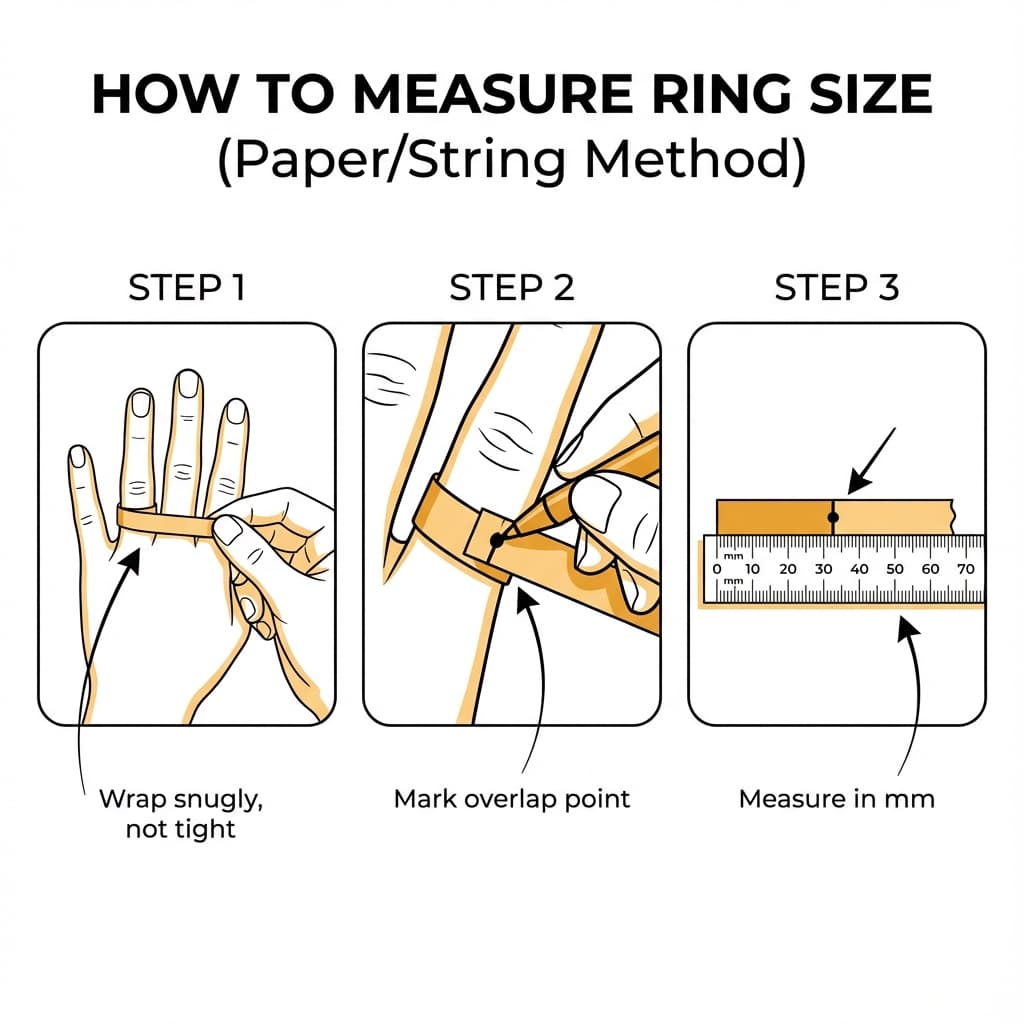
- Wrap a strip of paper or string around the base of your finger.
- Mark the point where the ends meet with a pen.
- Measure the string or paper with a ruler (mm).
Method 2: Existing Ring
If you have a ring that fits well, use this method:
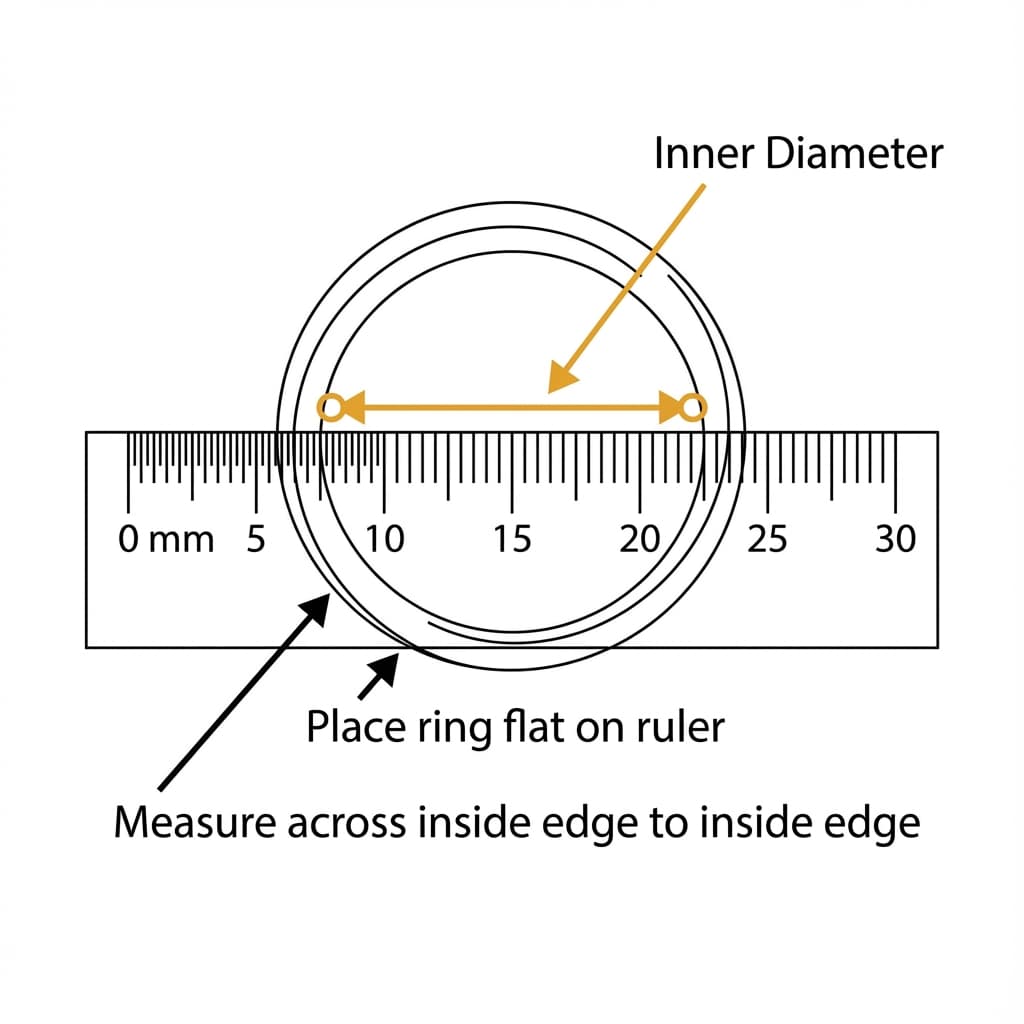
- Place your ring on a flat surface.
- Place a ruler on top of the ring.
- Measure the inner diameter (inside edge to inside edge).
💡 Pro Tip: Avoid Common Mistakes
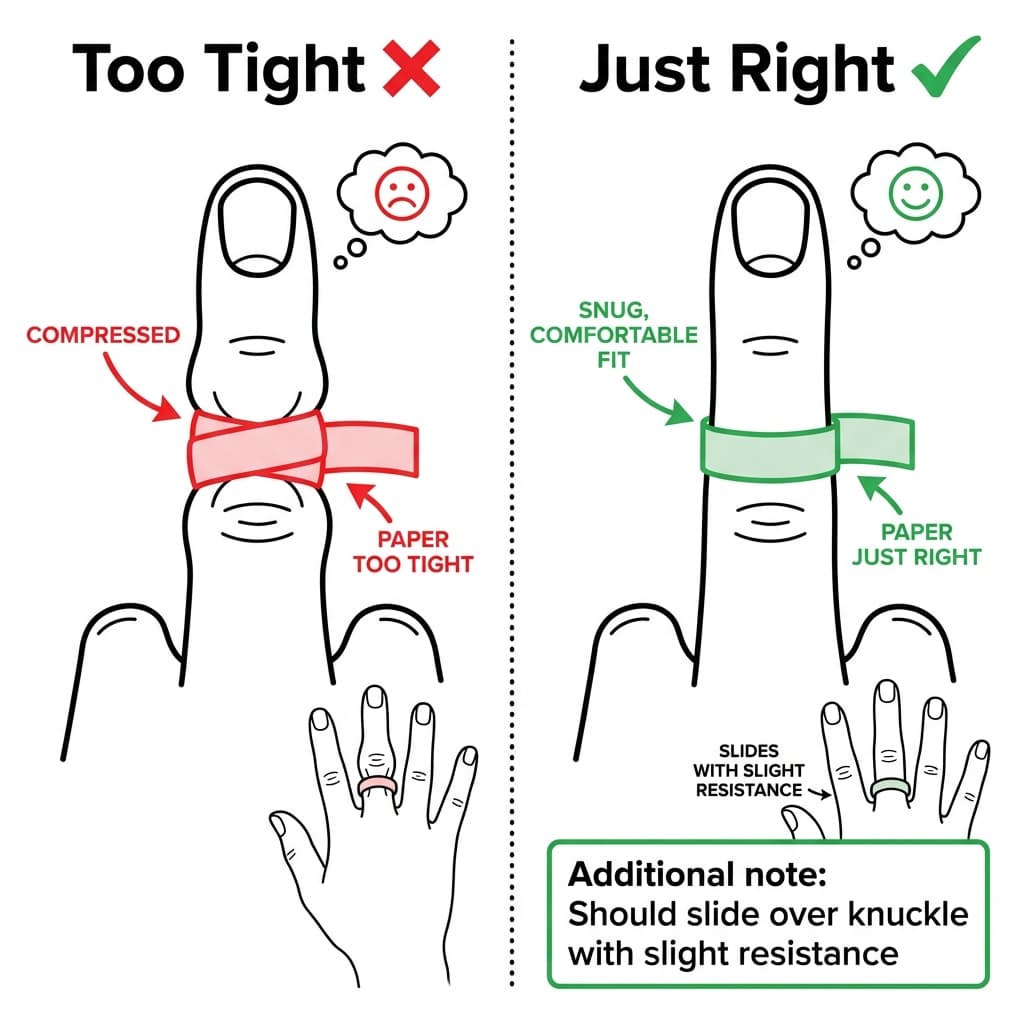
Don't pull the string too tight!
The paper or string should fit snugly around your finger, but not so tight that it squeezes your skin. It needs to be able to slide over your knuckle with just a little bit of resistance.
✓ Correct: Snug fit, comfortable
✗ Incorrect: Squeezing finger, too tight
🛡️ Our Methodology & Accuracy Standards
Data Verification: All ring size conversion data is cross-referenced against the ISO 8653:2016 jewelry sizing standard and official manufacturer charts from major international jewelry retailers.
Precision Calculation: Conversions between diameter and circumference use a high-precision constant for π (3.1415926535), ensuring that millimeter results are accurate to within 0.01mm.
Regional Authority: We distinguish between true EU sizing (circumference in mm) and the older DE/Central European standards. Our UK scaling adheres to the traditional British Standard 1283.
Continuous Updates: Our database is reviewed regularly for changes in international manufacturing tolerances to provide reliable, up-to-date guidance for jewelry shopping.
The Science of Sizing: International Ring Size Standards
Finding the perfect ring size is essential for comfort and style. Whether you are shopping for an engagement ring, a wedding band, or a statement piece, our Ring Size Converter ensures you get the measurement right every time. Jewelry sizing is not universal; it varies significantly by country and manufacturing standard.
💍 US vs. UK Sizing
The United States and Canada use a numerical scale (e.g., 7, 7.5, 8), whereas the United Kingdom, Australia, and many Commonwealth nations use an alphabetical scale (e.g., N, O, P). A US size 7 is approximately equivalent to a UK size O. Understanding these regional discrepancies is vital for international shopping.
📐 ISO 8653:2016 Standards
Most European countries (EU) and Japan use measurements based on the internal circumference of the ring in millimeters. Our tool adheres to the ISO 8653:2016 jewelry sizing standard, providing the most accurate results for modern jewelry manufacturing.
Common Measurement Methods
1. The String Method
Wrap a piece of non-stretchy string around your finger. Mark the overlap and measure against a ruler in millimeters. This gives you the circumference.
2. The Paper Strip
Similar to string, but less likely to stretch. Wrap a 1cm wide strip of paper around the knuckle and mark the meeting point.
3. Internal Diameter
If you already have a ring that fits, measure the inside diameter (from inner edge to inner edge) with a precise caliper or ruler.
Why Ring Size Varies (The Physics of Your Hand)
Your finger size can change throughout the day based on several factors:
- Temperature: Heat causes fingers to swell, while cold makes them shrink. Always measure at a moderate temperature.
- Time of Day: Fingers are often smallest in the morning and largest in the evening after daily activity.
- Sodium & Hydration: High salt intake or dehydration can cause temporary swelling.
- Hand Dominance: Your dominant hand is often slightly larger than your non-dominant hand.
The Knuckle Bottleneck Problem
When measuring, don't just measure the base of the finger. You must also consider the knuckle. If you have large knuckles, you should choose a size that is slightly larger than the finger base so that the ring can slide over the joint comfortably but not so loose that it spins.
Pro Tip: For wider bands (over 6mm), it is usually recommended to go up by a half size to account for the increased surface area and friction on the skin.
Frequently Asked Questions
Can all rings be resized?
No. Simple gold, silver, and platinum bands can usually be resized up or down 1-2 sizes. However, eternity bands (with stones all the way around), tungsten, and titanium rings usually cannot be resized.
What is a "Comfort Fit"?
A comfort fit ring has a domed interior, making it easier to slide over the knuckle. Often, users find they need a half size smaller in comfort fit than in standard fit rings.